
UPS and battery for load shedding: how to choose the right size (and make the battery last)
Add up your watts, match the UPS rating, size the battery for your outage length and look after it properly. A plain-English guide to UPS for load shedding.
On this page
Choosing a UPS for load shedding comes down to three questions. What do you need to run? For how long? And will the battery recharge before the next cut? Get those right and a home UPS will serve you for years. Get them wrong and you end up with a unit that trips, a battery that dies early, or both.
This guide walks through the sums in plain English, for homes and small shops where the power goes off for an hour or more at a time.
Step 1: Add up what you actually need to run
Start with a list, not a shop. Write down only what must keep working during a cut, then note the wattage printed on each appliance's label or adapter. If there is no label, use the rough ranges below and round up.
| Appliance | Typical running power (approx.) |
|---|---|
| LED bulb | 5–20 W |
| LED tube light | 15–25 W |
| Ceiling fan (standard) | 60–100 W |
| Ceiling fan (DC / inverter type) | 25–45 W |
| Pedestal or bracket fan | 50–90 W |
| Wi-Fi router or fibre ONT | 5–15 W |
| LED TV (32–43 inch) | 30–100 W |
| Laptop charging | 45–90 W |
| Desktop PC with monitor | 100–300 W |
| Phone charging | 5–25 W |
These are typical ranges only. Your appliance's own label is always the better number.
A common home setup is two fans, four LED lights, a router and a TV. Using mid-range figures, that is roughly 2 × 75 + 4 × 12 + 10 + 60 = around 270 W. Add a margin of 20–30% for start-up surges and future additions, and you are looking for a UPS that can comfortably deliver about 350 W.
Leave out irons, kettles, heaters, air conditioners and microwaves; they draw far more than a home UPS is built for.
Step 2: Understand VA vs watts
UPS units are usually sold by VA (volt-amperes), but appliances are measured in watts. The link is the power factor: in simple terms, the share of the VA rating that does useful work. Many home UPS units sit somewhere around 0.6–0.8, so:
a 1000 VA UPS may deliver roughly 600–800 W
a 1500 VA UPS may deliver roughly 900–1,200 W
Always look for the watt rating on the label or in the manual. Never size a UPS by VA alone.
Step 3: Work out backup time from battery size
A battery's stored energy is roughly its amp-hours (Ah) × voltage (V). A 12 V 150 Ah battery holds about 1,800 watt-hours (Wh) on paper. You do not get all of that, for two reasons:
Inverter losses. Turning battery DC into household AC wastes some energy as heat. Assume 80–90% efficiency for a decent unit.
Depth of discharge. Lead-acid batteries last much longer if you use only about half their capacity before recharging.
A simple formula
Backup hours ≈ (Ah × V × usable fraction × efficiency) ÷ load in watts
Worked example (an estimate, not a promise)
Take a 12 V 150 Ah lead-acid battery, use 50% of it, assume 85% efficiency, and run the 270 W load from Step 1:
150 × 12 × 0.5 × 0.85 ≈ 765 Wh, and 765 ÷ 270 ≈ 2.8 hours
Real results will differ. Heavy loads drain lead-acid faster than the simple sum suggests, and battery age, heat and charge level all matter. Treat this as a starting point, and if your outages run long, size up or cut the load.
Pure sine wave vs modified sine wave
A pure sine wave UPS gives output close to normal mains power. A modified sine wave UPS gives a stepped copy of it.
On a modified sine wave, fans and other motors often hum, run warmer and may lose a little speed.
Some chargers, audio gear and other sensitive electronics can buzz, heat up or misbehave.
Pure sine wave units cost more, but for a home running fans and a TV every day they are usually worth it.
Choosing the battery: tubular, flat-plate or lithium
| Battery type | Strengths | Trade-offs |
|---|---|---|
| Flat-plate lead-acid | Lowest upfront cost, widely available | Shorter life with frequent deep discharges |
| Tubular lead-acid | Built for daily deep cycling, longer life than flat-plate | Heavier, costs more, needs water top-ups and longer charging |
| Lithium (LiFePO4) | Many more cycles, deeper usable capacity, lighter, charges faster, no water | Highest upfront cost; needs a compatible UPS or charger and a proper battery management system (BMS) |
For long, repeated outages, tubular is the usual lead-acid choice. LiFePO4 can work out cheaper over its life if you cycle it daily, but never fit one to a lead-acid UPS without checking it supports lithium charging.
Single or dual battery?
Smaller UPS units usually run on one 12 V battery; larger ones use two in series for 24 V. Higher voltage means lower current for the same power, so cables run cooler and waste less.
With two batteries, both must be the same type, capacity, brand and age, and should be replaced as a pair. A new battery paired with an old one wears out quickly.
Charging current: the part most people ignore
With load shedding, the real question is often not "how long will it last?" but "will it recharge in time?"
If the power comes back for only an hour or two between cuts, a weak charger never fills the battery. A lead-acid battery that lives partly charged builds up sulphate on its plates and loses capacity month by month.
A common rule of thumb for lead-acid is a charging current of about 10–20% of the Ah rating, roughly 15–30 A for a 150 Ah battery. The battery maker's figure comes first.
If your UPS lets you set the charging current, match it to your battery rather than picking the highest setting.
Lithium accepts faster charging, a real advantage when the gap between cuts is short.
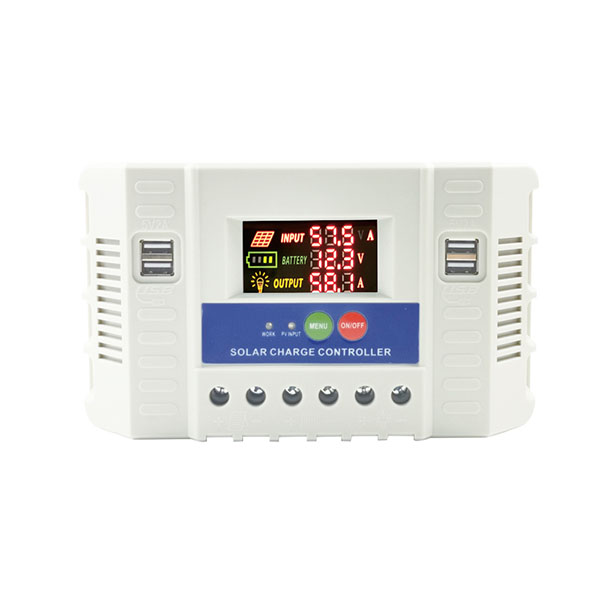
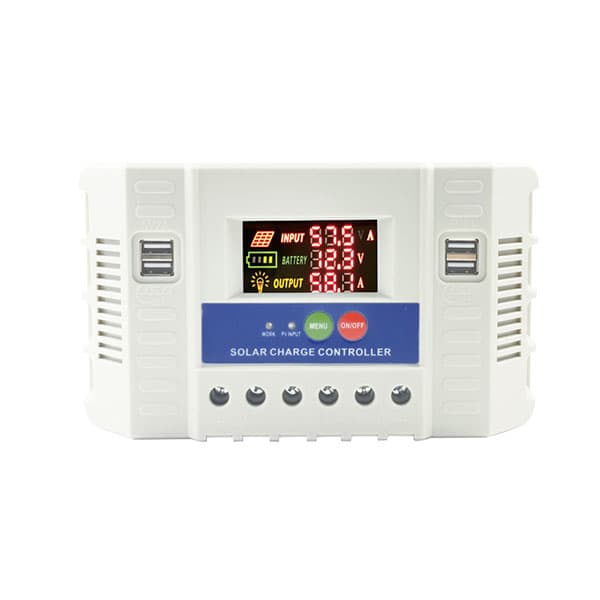
If you have rooftop panels, a proper solar charge controller can top the battery up during the day.
Battery maintenance that makes a real difference
For flooded (water) batteries
Check the water level every few weeks (many tubular batteries have a float indicator). Top up with distilled or battery water only, never tap water.
Top up after a full charge, to the marked level. Overfilling makes acid spill out.
For every battery
Keep terminals clean and tight. White or green crust is corrosion: clean it with a little baking soda in water, dry, then apply a thin coat of petroleum jelly.
Avoid running it flat. Do not drain the battery to nothing every day.
Keep it cool and ventilated. Heat shortens battery life.
Charge it fully when you can, especially after a long outage.
Safety: placement, wiring and fuses
Flooded lead-acid batteries release hydrogen gas while charging. It is flammable.
Place the battery in a well-ventilated spot, out of sealed cupboards and away from the stove, open flames and sparking switches.
Keep children and pets away. Battery acid burns skin and eyes.
Use correctly sized copper DC cable between battery and UPS. Thin wire heats up and wastes power.
Fit a DC fuse on the battery's positive lead, close to the battery, so a short blows the fuse instead of setting the wire alight. See our fuses.
Turn the UPS off before connecting or disconnecting the battery.
Have house wiring and any changeover switch done by a qualified electrician.
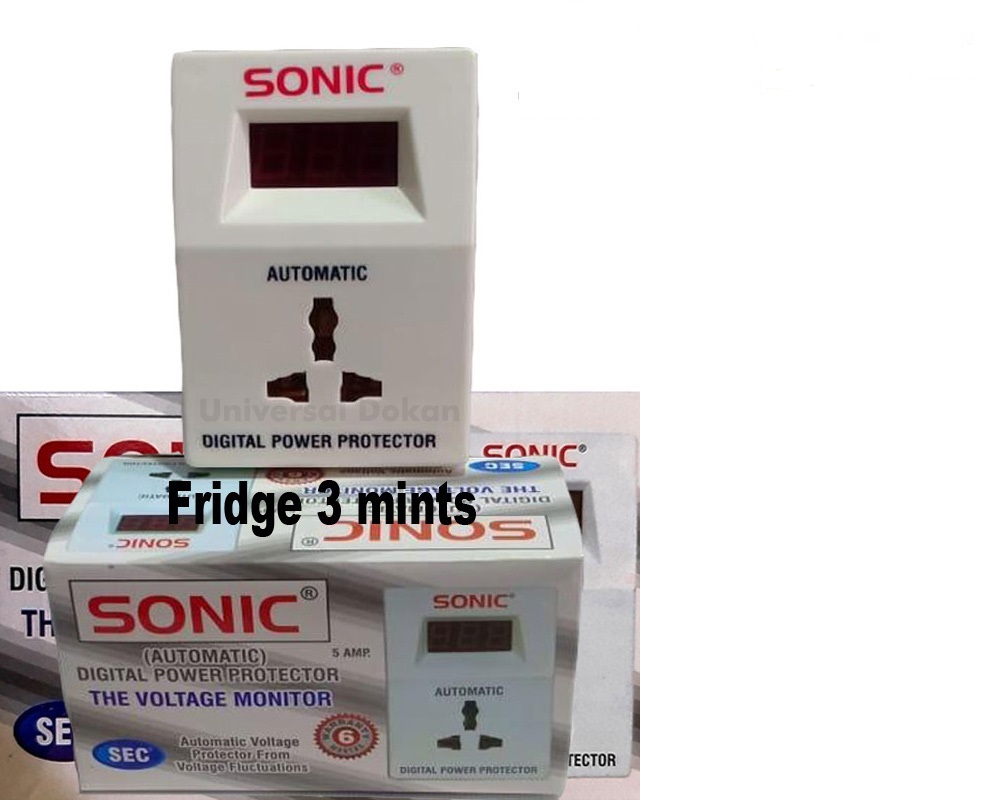
Power often returns with a surge or sag. A voltage protector helps shield fridges, TVs and other appliances.
A cheap win: a DC mini UPS for your router
If staying online is the main concern, you may not need a big UPS for it. A small DC mini UPS sits between the router's adapter and the router. It skips the DC-to-AC-to-DC conversion, so little power is wasted, and it can often keep a router or fibre ONT running for hours.
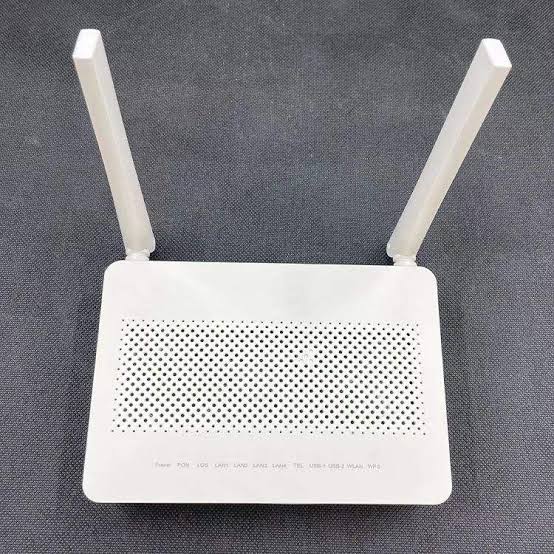
Check the voltage and plug size on your router's adapter (often 12 V) and pick a mini UPS whose output matches. Upgrading the router too? Browse our fibre routers.
Buying checklist
Listed every essential appliance and added up the watts
Added a 20–30% margin
Checked the UPS watt rating, not just VA
Chosen pure sine wave if you run fans, motors or sensitive electronics
Sized the battery using the backup formula, as an estimate
Confirmed the charging current suits your battery and the gaps between your cuts
Picked a battery type (flat-plate, tubular or LiFePO4) your UPS supports
For two batteries: identical models bought together
Planned a ventilated, shaded spot with proper cable and a DC fuse
Considered a DC mini UPS for the router
When to replace the battery
There is no fixed date. Lead-acid batteries commonly last a few years, and tubular types usually outlast flat-plate ones, but use, heat and charging habits matter more than the calendar. Replace the battery when you see:
backup time clearly shorter than it used to be, even after a full charge
a swollen or cracked case, leaking acid or a strong smell
the battery getting hot while charging
voltage dropping fast as soon as a load is switched on
Frequently asked questions
What size UPS do I need for two fans, lights and a router?
Add up the watts (often 200–300 W for that kind of setup), add a 20–30% margin, and choose a UPS whose watt rating covers the total. Check the watt figure on the label, not just the VA.
Can a bigger battery give me more backup on the same UPS?
Usually, within limits. The UPS must be rated for that capacity and its charger strong enough to refill it between outages. Check the manual for the maximum battery size.
Is LiFePO4 worth it for load shedding?
If you cycle the battery daily and your UPS supports lithium charging, often yes: it lasts many more cycles and recharges faster. Compare cost over the battery's life, not just today's price.
Why does my fan hum on UPS?
Most likely the UPS gives a modified sine wave output. The fan is fine for now, but it runs warmer than it would on a pure sine wave UPS.
Should I use tap water to top up my battery?
No. Tap water contains minerals that damage the plates. Use distilled or battery water only.
Can I run a fridge on a home UPS?
Sometimes, but the compressor's start-up surge is several times its running power. Many small UPS units cannot handle it. Check with the UPS maker or ask us before trying.
Need a hand?
Our family has sold electronics in Burewala since the 1960s, now into a third generation. Browse our UPS & power range for voltage protectors, DC supplies and converters, or message us on WhatsApp at 0304 4403336 if you are unsure what suits your setup.
We deliver across Pakistan, with free delivery over Rs 5,000 and cash on delivery. If something arrives faulty, send us your unboxing video and order number on WhatsApp at 0300 7594322 within 3 days (see our return and replacement policy).