
Power bank buying guide: how many charges does 10,000 mAh really give?
A 10,000 mAh power bank gives most phones about one and a half charges, not two. Here is why, and how to pick the right size, speed and a safe, genuine one.
On this page
The short answer: a genuine 10,000 mAh power bank usually gives a modern phone with a 4,000–5,000 mAh battery about one to one and a half full charges, not two. That is not a trick: some energy is always lost between the bank's cells and your phone's battery.
Below we explain where that energy goes, how to choose the right size, and how to avoid the fake power banks common in markets across Pakistan.
Why 10,000 mAh does not mean 10,000 mAh for your phone
The voltage gap
The mAh number printed on a power bank describes its internal lithium cells, which run at about 3.7 volts. But a USB port sends power out at 5 volts or more (fast charging can use 9 V, 12 V or higher). To raise the voltage, the bank's circuit has to "spend" some of its stored charge, so fewer milliamp-hours come out at 5 V than went in at 3.7 V.
The fairer way to compare is watt-hours (Wh), which already includes voltage:
Wh = mAh × V ÷ 1,000. So 10,000 mAh × 3.7 V ÷ 1,000 = 37 Wh.
Heat and conversion losses
Every step wastes a little energy as heat: the bank's voltage booster, the cable, and your phone's own charging circuit, which converts the power back down to battery voltage.
A worked example (approximate)
These are rough, typical figures for illustration, not a measurement of any particular model:
Rated capacity: 10,000 mAh (37 Wh).
Usable after losses: roughly 60–70%, so about 6,000–7,000 mAh ends up in your phone's battery.
Phone with a 5,000 mAh battery: about 1.2 to 1.4 full charges.
Phone with a 4,000 mAh battery: about 1.5 to 1.7 full charges.
A well-made bank sits at the upper end of that range; a poorly made or aged one sits lower.
Choosing the right size
Bigger is not always better. A larger bank is heavier, takes longer to recharge and can run into airline limits.
| Capacity | Approx. charges (4,000–5,000 mAh phone) | Best for |
|---|---|---|
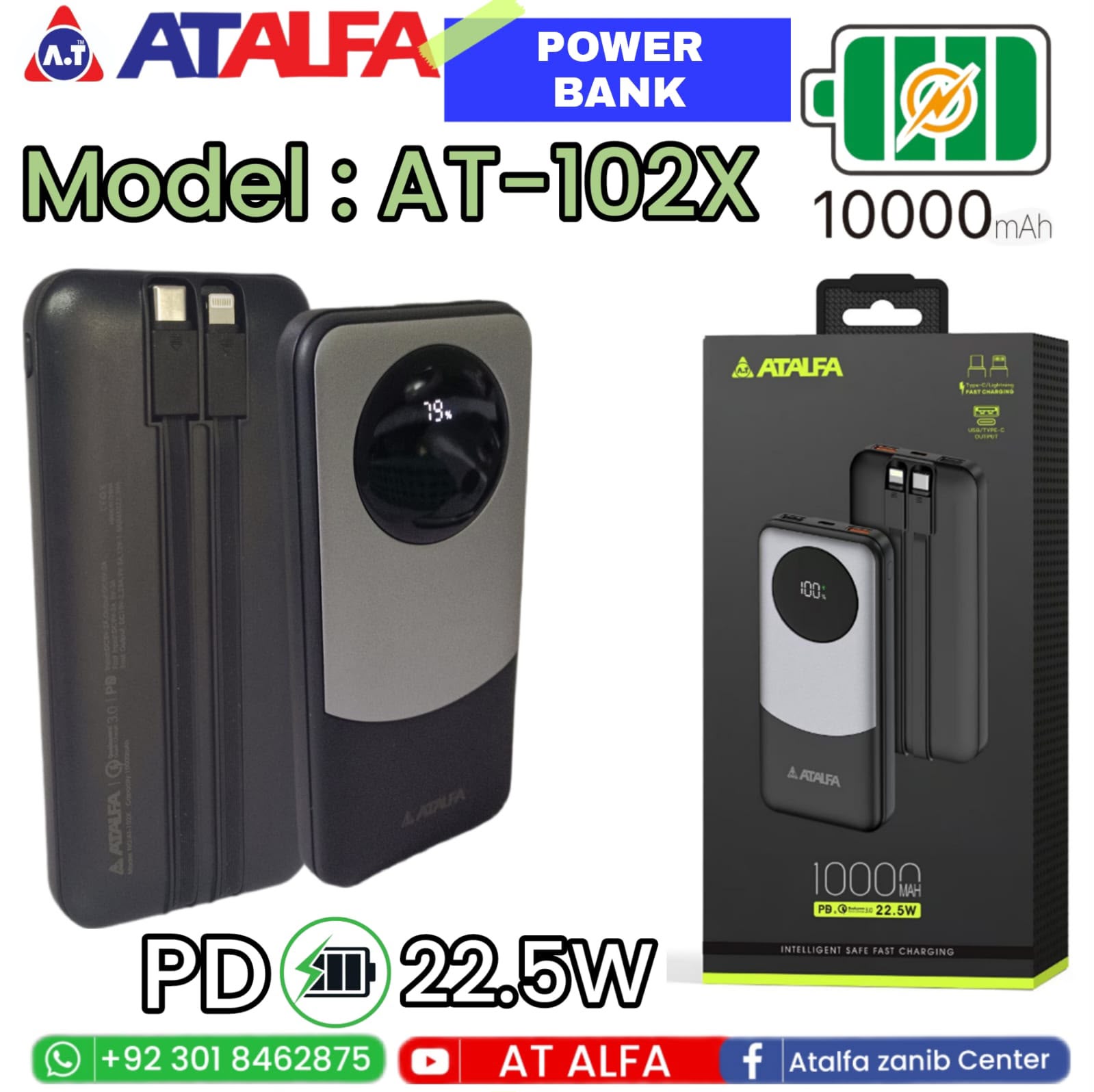
| 10,000 mAh (37 Wh) | about 1.2–1.7 | Daily carry, college, office, one long day out |
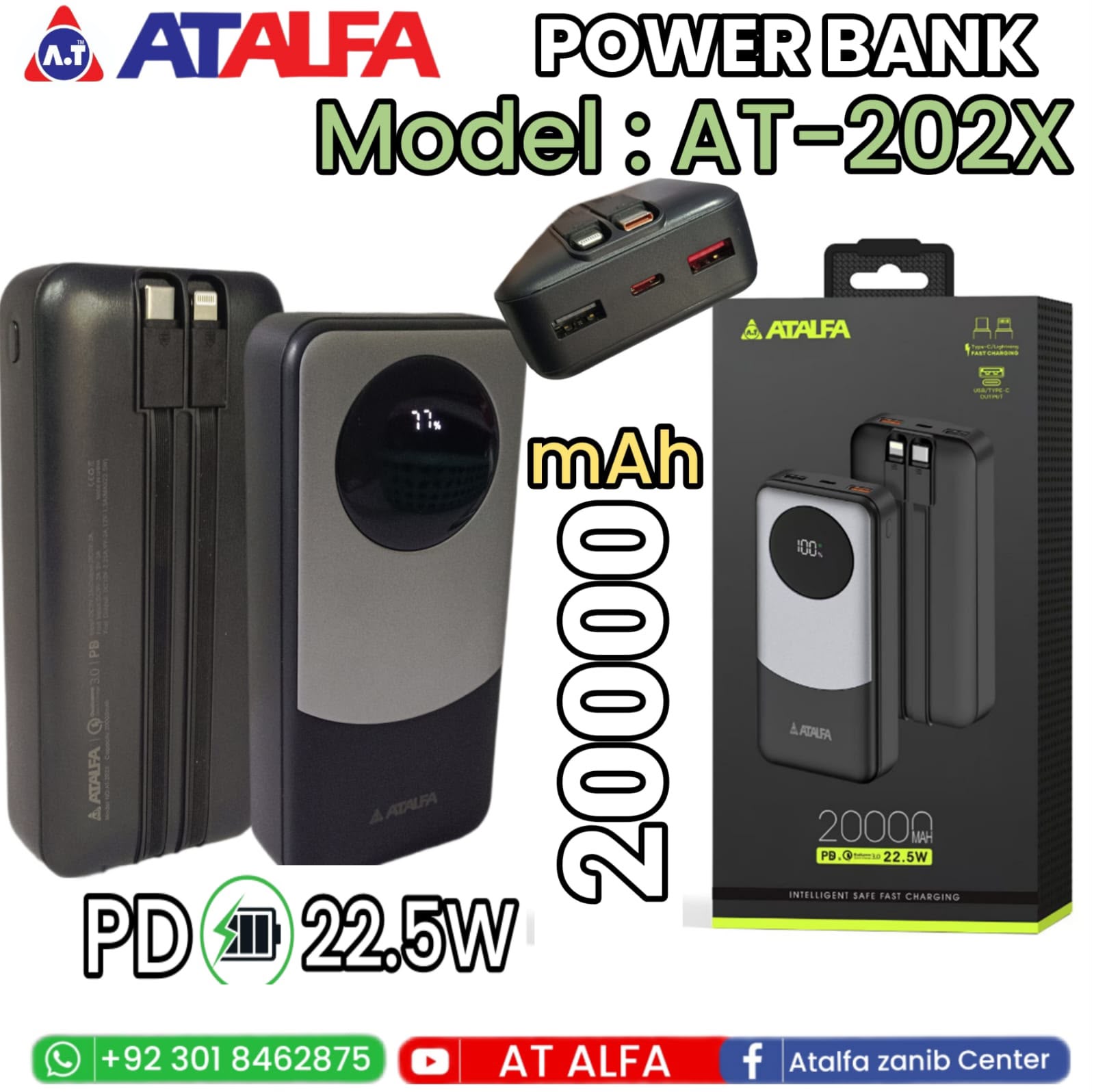
| 20,000 mAh (74 Wh) | about 2.5–3.5 | Travel, weekend trips, two phones, longer load-shedding |
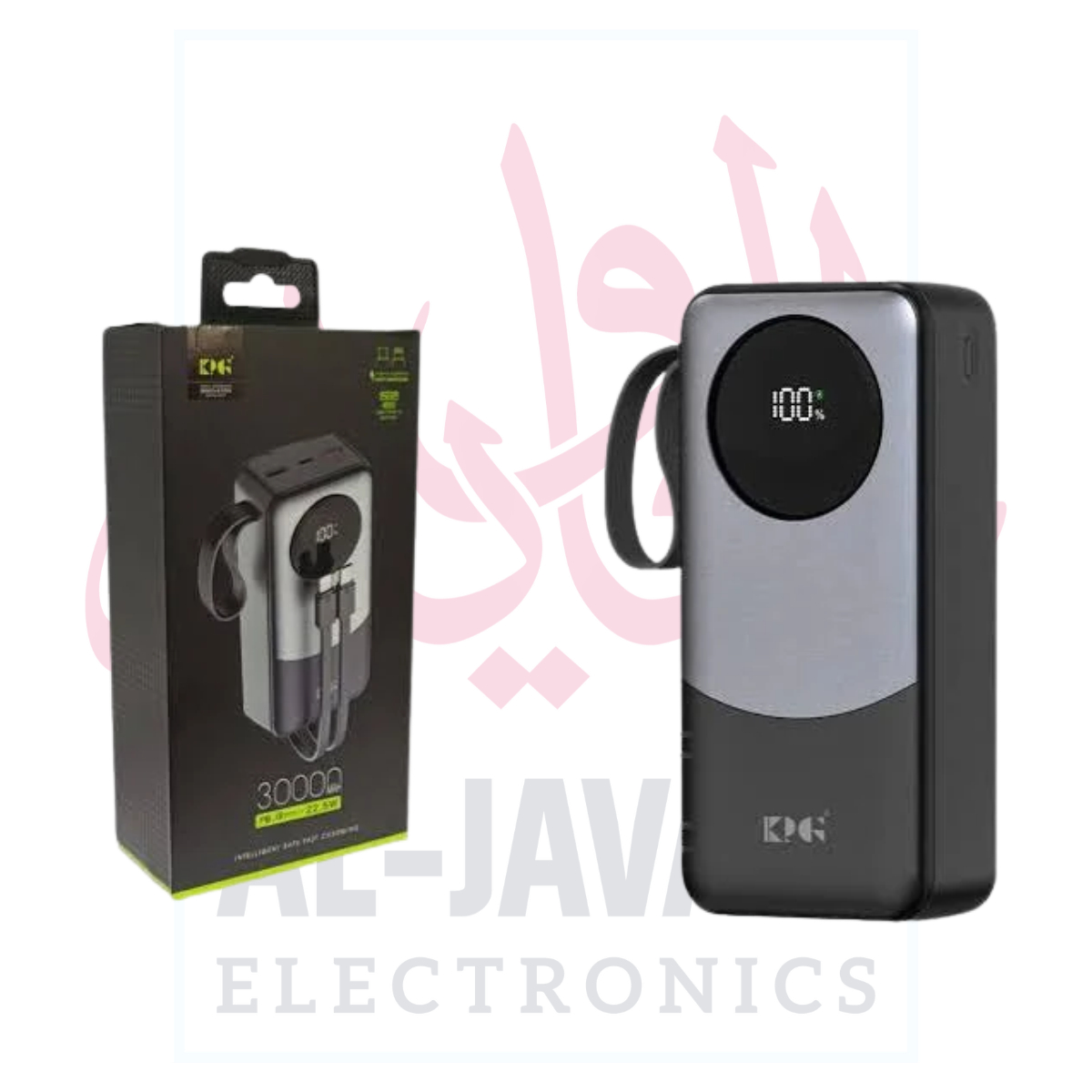
| 30,000 mAh (111 Wh) | about 3.5–5 | Extended outages, family use, staying at home (check airline rules before flying) |
Figures are approximate and assume 60–70% usable capacity.
Daily carry
A 10,000 mAh power bank is the sweet spot for most people. It fits a pocket or handbag and tops up a phone that dies by evening.
Travel and long days
A 20,000 mAh bank suits bus and train journeys, weddings, or anyone carrying two phones.
Load-shedding at home
For long outages, a 20,000 or 30,000 mAh bank can keep the family's phones alive. If your problem is the Wi-Fi going down, a phone power bank will not help the router; a dedicated 12 V modem power bank is built for that job.
Output, fast charging and input speed
Output wattage and fast-charging standards
Capacity tells you how much charge you get; wattage tells you how fast. Look for:
USB Power Delivery (PD): the common fast-charging standard over USB-C, used by iPhones, Pixels, many Samsung phones and laptops.
Quick Charge (QC): a widely used fast-charging standard on many Android phones, usually through a USB-A port.
Watts on the label: a basic port gives about 10–12 W; 18–22.5 W is a comfortable fast-charging level for most phones; 30 W and above helps with tablets and bigger phones.
Your phone only fast-charges if the bank, the cable and the phone all support the same standard. A slow cable can quietly cap the speed, so pair the bank with a good Type-C to Type-C cable.
Input speed: how long the bank itself takes to fill
This is often forgotten. As a rough guide, a 10,000 mAh bank (37 Wh) that accepts only 10 W input needs around 4–5 hours to fill once losses are included. With 18–20 W PD input, that drops to about 2–3 hours. A 20,000 mAh bank roughly doubles these times. During load-shedding, fast input matters: you want the bank full before the power goes again. A good wall charger with PD output makes a real difference here.
Ports
USB-C that works both ways (input and output) is the most useful port today. One cable charges the bank and the phone.
USB-A outputs are handy for older cables and earbuds.
Micro-USB input only usually means slower recharging. Fine for a budget bank, but know what you are getting.
Two or more outputs let you charge two devices, but the total wattage is shared between them.
Can a power bank charge a laptop?
Some can. A laptop that charges over USB-C needs a bank with USB-C PD output of roughly 45–65 W or more, depending on the laptop. Check the watts on your laptop's original charger and choose a bank that matches or comes close. A phone-style bank with 18–20 W output may slow the battery drain but will not properly charge most laptops.
Flying with a power bank
These are general rules most airlines follow. Always check your own airline's policy before you fly, because rules vary and change.
Power banks go in cabin baggage only, never in checked luggage.
Most airlines allow banks up to 100 Wh without approval. That covers 10,000 mAh (37 Wh) and 20,000 mAh (74 Wh).
Between 100 and 160 Wh usually needs airline approval. A 30,000 mAh bank at 3.7 V is about 111 Wh, so it falls into this group.
The Wh rating should be printed on the bank. Security staff may refuse an unlabelled one.
Some airlines limit how many banks you carry, or do not allow using them during the flight.
How to spot a fake power bank
Fake and over-labelled power banks are common. Watch for:
Weight that does not match the label. Lithium cells are dense. A genuine 10,000 mAh bank has some heft; a 20,000 mAh one feels clearly heavy. A "20,000 mAh" bank that feels as light as a phone is a warning sign.
Sand, clay or weights inside. Some fakes pad the case with filler and a single small cell to feel heavy enough while holding only a fraction of the claimed charge.
Impossible numbers. "50,000 mAh" in a slim, pocket-size shell, or a big capacity at a suspiciously low price.
No Wh rating, no input/output details, no brand or protections listed. A proper bank lists its capacity, Wh, input, output and safety protections.
It empties far too quickly. If a "20,000 mAh" bank cannot fully charge your phone once, it is not 20,000 mAh.
Safety: what to watch for
A good power bank includes protection against overcharging, over-discharging, short circuits and overheating, and uses certified cells from a known maker. Even so:
Stop using a swollen bank immediately. A puffed-up case, bulging seams or a hissing or chemical smell means the cells are damaged.
Warm is normal; hot is not. If it is too hot to hold comfortably, unplug it.
Do not charge overnight on a bed, pillow or sofa. Soft surfaces trap heat. Charge on a hard, open surface away from anything that can burn.
Do not leave it in a closed car in summer. Pakistani summer heat inside a parked car can damage lithium cells.
Care tips to make it last
Avoid running it to zero regularly; recharging from around 20% is kinder to the cells.
If storing it for weeks, leave it about half charged and top it up every month or two.
Use decent cables. A cheap cable can be slow and can run hot.
Power bank buying checklist
Capacity matches your use: 10k daily, 20k travel, 20–30k load-shedding
Wh rating printed on the bank (important for flights)
Output wattage and fast-charging support (PD/QC) that your phone uses
Input speed listed, ideally USB-C PD input
USB-C port that works both ways
Enough outputs for your devices
Laptop needed? Look for PD 45–65 W or more
Weight feels right for the capacity
Protections listed (overcharge, short circuit, temperature)
A seller you can return it to if it is faulty
Frequently asked questions
How many times can a 10,000 mAh power bank charge my phone?
For a phone with a 4,000–5,000 mAh battery, expect about 1.2 to 1.7 full charges from a genuine bank. Smaller batteries get more charges; using the phone while charging gets fewer.
Is a 20,000 mAh power bank allowed on a plane?
Usually yes, in cabin baggage. At 3.7 V it is about 74 Wh, under the common 100 Wh limit. Never pack it in checked luggage, and check your airline's rules before travelling.
Why does my power bank take so long to charge?
It probably has a slow input, such as micro-USB or 10 W USB-C. A bank that supports PD input, paired with a PD wall charger and a good cable, fills much faster.
Will a fast-charging power bank damage my phone's battery?
No. With PD or QC, the phone negotiates how much power it accepts and its own charging circuit manages the battery. Heat is the bigger enemy, so avoid charging under a pillow or in direct sun.
Can I use my phone while it charges from a power bank?
Yes, but it charges more slowly and you get fewer charges out of the bank.
Is it safe to leave a power bank charging overnight?
A good bank with proper protections stops charging when full, but it is still wise to charge it on a hard surface, not on a bed, and to unplug it once it is full.
Find the right power bank
At Al-Javaid Electronics we have been selling electronics in Burewala since the 1960s, now in our third generation, and we deliver across Pakistan with cash on delivery and free delivery on orders over Rs 5,000. Browse our power banks, or message us on WhatsApp at 0304 4403336 with your phone model and how you plan to use it, and we will help you choose. If anything arrives faulty, our return and replacement policy covers you: send us your unboxing video on WhatsApp at 0300 7594322 within 3 days.